

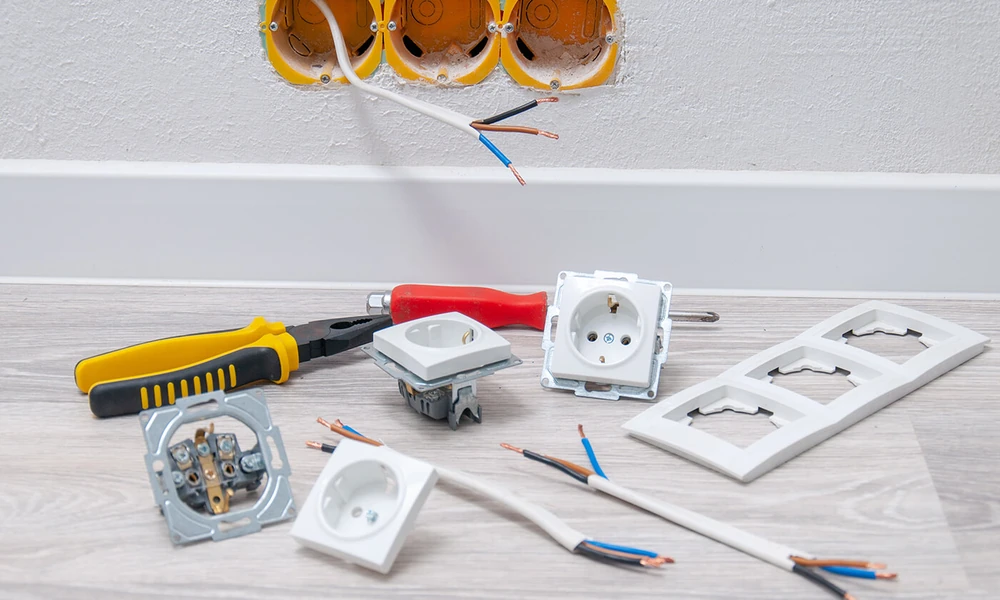
Household wiring fails quietly. A leaking faucet announces itself, but a hot connection or a worn patch of insulation gives few clues until the damage is done. That is why folk wisdom about electricity survives long after it stops being true. Along the New Jersey coast the gap widens, because salt air, seasonal storms and houses built decades before heat pumps, EV chargers and dimmable LEDs all change how a wiring system behaves. Four beliefs come up more than any others, and each one falls apart once you look at what is physically happening inside the circuit.
Sorting fact from folklore is easier with someone who can open the panel and test what is actually there. A Wall Township electrician from TWO Electrical Contracting can do that for homes and businesses alike, from custom kitchen, bath and master bedroom wiring to modern lighting and fixture installation. The company also runs a 24-hour emergency service, so a burning smell at the panel or a dead circuit after a storm does not have to wait for morning. Call (848) 202-1643 to ask for a free estimate.
A tripped breaker is only a nuisance
A breaker is a protective device, and a trip is its way of reporting a condition. Inside, a bimetal strip bends as current heats it, which catches slow overloads such as too many appliances sharing one circuit. A separate electromagnet reacts almost instantly to a short circuit. A breaker that trips once during a crowded holiday dinner may simply have met a heavy load. One that trips repeatedly, or for no obvious reason, points to something else: a failing appliance, damaged insulation, or a loose terminal that heats up under load.
Resetting it again and again fixes none of these. Each trip under fault conditions also wears the mechanism, so a tired breaker can eventually fail to open when it should. Arc fault and ground fault breakers go further by reading the current waveform for the signature of arcing or leakage, so a trip on those devices deserves extra attention. Stop resetting and call a professional when you notice any of these:
- A breaker or panel cover that feels warm, or a hot plastic smell nearby
- A circuit that trips again within minutes of being reset
- Buzzing, crackling or scorch marks at the panel or an outlet
- Trips that follow rain or wind, which can mean water in an outdoor box
Swapping a fixture never requires paperwork
There is a grain of truth here. Replacing a fixture with a like-for-like model on a healthy existing circuit is generally treated as ordinary maintenance under New Jersey’s Uniform Construction Code. The belief breaks down once the job changes the circuit itself, such as moving a box, adding recessed lights, running new cable or adding a dimmer that changes the load. Those jobs call for a permit and an inspection, and the reason is practical. An inspector checks box fill, wire gauge against breaker size, grounding, and whether each connection is tight and listed for its location. The state posts the currently adopted construction codes through the Department of Community Affairs, and the township construction office can confirm whether a specific project counts as minor work.
Older shore housing adds another wrinkle. Cloth or rubber insulation from the mid-century era can turn brittle and crumble when a fixture is disturbed, and many older boxes have no ground at all, which a modern fixture may expect. A skipped permit also tends to resurface at resale or during an insurance claim after a fire.
Flickering lights always mean a bad bulb
Bulbs are the cheapest suspect and sometimes the right one. LED drivers can also flicker on dimmers that were designed for old incandescent loads, and a large motor such as an air conditioner compressor or well pump can cause a momentary voltage dip when it starts. A flicker that appears in several fixtures at once is a different story. It often means a loose connection or a poor neutral, where electrical resistance builds heat and arcing at a terminal.
Coastal air makes this more likely. Humid, salt-laden air corrodes copper and aluminum terminations at meter sockets, service masts, outdoor receptacles and unconditioned attics. Corrosion adds resistance, and resistance means voltage drop and heat. A quick way to read the pattern:
- One fixture only: likely the bulb, socket or dimmer
- Several lights on one circuit together: likely a shared connection or neutral
- The whole house dimming when the AC starts: likely the service connection or the utility side
The third pattern is worth a professional look sooner rather than later, because service-level faults carry the most heat and the most risk.
Licensing only matters on big projects
New Jersey ties electrical work for hire to a license, and size has nothing to do with it. The Board of Examiners of Electrical Contractors within the Division of Consumer Affairs licenses contractors and issues business permits. Applicants must show years of hands-on experience and pass an examination covering the National Electrical Code, grounding, bonding and business law. That training matters because it is the same knowledge a small job relies on: correct conductor sizing, proper bonding of metal parts and the right device for a wet location.
A licensed contractor also pulls the permit, which brings in the township’s electrical subcode official for an independent inspection, and that inspection record stays attached to the house. A quick cash job by an unlicensed worker leaves no such record, and no recourse if a hidden splice fails months later.
The point becomes sharper after storms. Coastal flooding events like Sandy and later nor’easters have pushed salt water into panels, receptacles and sub-panels across the Jersey Shore. Salt residue stays conductive and keeps corroding the inside of breakers even after everything looks dry, so officials consistently advise that flooded electrical systems be inspected by a licensed electrician before power is restored.
What the four beliefs have in common
Each myth treats electrical trouble as something visible and loud, when most of it is gradual: heat building at a connection, corrosion creeping across a terminal, insulation aging inside a wall. Older panels sized for a 1960s household are now asked to carry induction ranges, EV chargers and heat pumps, which raises the stakes on every loose lug and tired breaker. Treating a trip, a flicker or a fixture swap as information instead of an annoyance is the simplest habit that keeps a coastal home’s wiring safe.
