

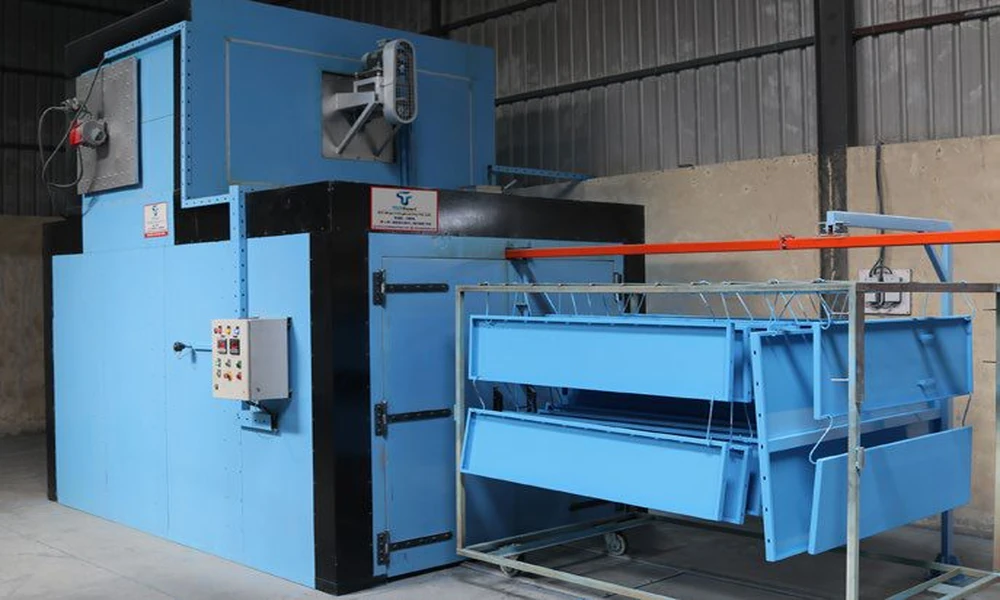
Production pressure often shows up first in the curing stage. Parts may be sprayed and ready, but if the oven cannot recover heat, hold temperature, or move batches fast enough, the whole line starts to slow down. Shops reviewing powder coating equipment should look closely at whether their current oven still matches the size, pace, and quality demands of daily work.
Uncured Batches Signal Flaws in Your Current Oven Airflow
Uneven curing can point to poor airflow inside the oven. Powder may look finished on the surface, yet the coating can remain weak if the part never reaches the proper metal temperature throughout the full cure cycle. Corners, recessed areas, thick sections, and tightly packed racks often reveal airflow problems first.
Balanced circulation helps heated air reach the full load instead of only the easiest exposed surfaces. Weak fans, blocked ducts, crowded carts, or poor chamber design can leave some parts under-cured while others receive too much heat. Reliant powder curing ovens are designed for shops that need steadier heat movement across real production loads.
How High-Efficiency Burners Accelerate Curing Line Velocity
Burner performance affects how quickly the oven reaches temperature after loading. Heavy parts pull heat from the chamber, and a weak burner may take too long to recover. That delay adds minutes to every batch, which can become hours of lost production by the end of the week.
Efficient burners help support faster cycle recovery without wasting unnecessary fuel. Strong heat output, matched with proper airflow, allows the line to move more predictably. Shops comparing Reliant powder coating equipment for sale often review burner capacity because cure speed matters when deadlines depend on repeatable throughput.
Escalating Utility Bills Prove Poor Insulation Waste Energy
Rising energy costs can reveal that an oven is working harder than it should. Poor insulation, leaking doors, thin wall panels, worn seals, or heat loss around openings can force the burner to run longer. The oven may still reach set temperature, but it costs more to stay there.
Solid insulation helps keep heat inside the cure chamber where it belongs. Better heat retention also improves temperature stability during long shifts. For growing shops, upgrading powder coating equipment may reduce wasteful energy loss while improving daily production consistency.
Signs Your Production Line Is Stalled by Slow Heat-Up Times
Slow heat-up times can make the whole finishing process feel behind before the first batch is complete. Crews may wait for the oven to reach temperature, delay loading racks, or push cure cycles later into the day. These small pauses can limit how many finished parts leave the shop.
Reliable oven performance shortens the gap between preparation, spraying, curing, and inspection. A faster heat-up cycle does not only save time at startup; it also helps teams recover after breaks, part changes, or large batch loads. Daily demand becomes easier to manage when the oven no longer controls the pace of the entire line.
Structural Deflection Happens When Ovens Lack Rigid Steel Framing
Oven structure matters more than it may appear from the outside. Weak framing can shift, flex, or lose alignment over time, especially around doors, tracks, and large openings. Structural movement can affect seals, airflow, cart travel, and overall chamber performance.
Rigid steel framing supports long-term reliability under repeated industrial use. Heavy parts, rolling carts, daily loading, and temperature cycling all place stress on the oven body. Shops running high-volume finishing work need equipment built to hold its shape instead of slowly creating fit and performance problems.
Maximizing Daily Throughput Demands Precise Digital PLC Tuning
Modern controls can help operators run more consistent cure cycles. Digital PLC systems may manage temperature settings, timers, alarms, recipes, and cycle data so workers do not rely on guesswork. This is especially useful when a shop coats different metals, part sizes, and powder types throughout the week.
Correct tuning also helps reduce mistakes between shifts. Operators can follow stored settings for repeat jobs, making the curing process easier to control. Reliant powder coating equipment can support more organized production when controls are matched to the team’s workflow and training level.
Frequent Finish Rejects Often Stem From Clogged Exhaust Fans
Exhaust systems help remove fumes, airborne residue, and combustion byproducts from the oven during curing. If exhaust fans become clogged, restricted, or poorly balanced, oven performance can suffer. Finish issues may show up as odors, uneven cure, contamination, or inconsistent surface quality.
Routine maintenance helps, but poor exhaust design can still limit production. A curing oven should ventilate properly without pulling out so much heat that energy use climbs. Shops dealing with repeat finish rejects should check exhaust performance before blaming only powder, pretreatment, or spray technique.
Heavy Substrates Require Massive BTU Output to Meet Deadlines
Thick steel, dense weldments, castings, and large fabricated parts absorb heat slowly. These parts may need more burner capacity and longer soak time than lighter materials. If BTU output is too low, the oven may stretch every cycle and still leave the coating short of the required cure.
Proper sizing should be based on the heaviest workload the shop expects to run, not just average parts. Reliant Finishing Systems offers Reliant powder curing ovens and powder coating equipment built for real production demands, including larger parts, heavier substrates, stronger heat recovery, and steadier daily throughput. For shops comparing Reliant powder coating equipment for sale, their oven line gives finishing operations a practical way to match curing capacity with workload growth and customer deadlines.
