

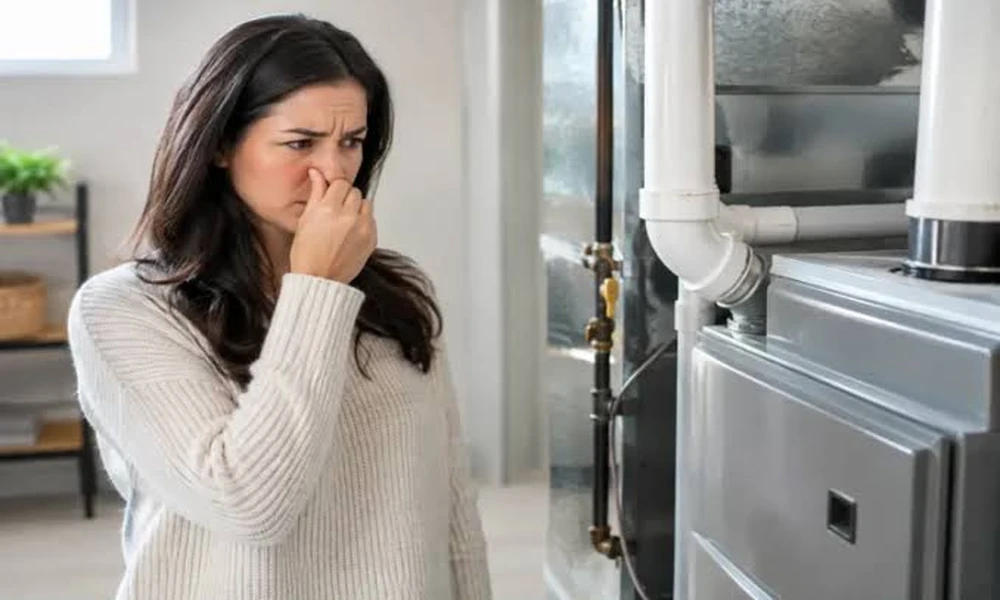
Every fall, the furnace comes back to life after months of rest. It hums, the house warms up and everything seems fine. But a furnace is a fire in a box, and when something goes wrong with the burning or the venting, the problem can be one that nobody in the house can see, smell or taste.
That is why a regular visit from a Grand Island hvac company is about more than comfort. This article explains how carbon monoxide can build up around a furnace, what to watch for and what the University of Nebraska says to do about it.
An Invisible Problem
The University of Nebraska-Lincoln Extension covers this in its NebGuide Healthy Homes: Managing Combustion Pollutants, written by housing specialist Shirley Niemeyer and issued in June 2011. It describes carbon monoxide, or CO, as a colorless, odorless gas that interferes with the delivery of oxygen throughout the body.
How a Furnace Can Produce It
The guide explains that CO forms when fuel burns with too little oxygen. Gas furnaces and water heaters are common sources, especially when they malfunction. It also lists blocked or cracked vents and cracked furnace heat exchangers among the causes, along with running gas engines or grills in garages.
When Vents Run Backward
Even a healthy furnace can cause trouble if the gases do not leave the house. The guide describes downdrafting, which results when air flow reverses in a vent or chimney, pulling air and flue gases back into the house. Exhaust fans, dryers and tight construction can trigger it.
What It Feels Like
Low-level exposure can look like the flu, with nausea, dizziness, headache and fatigue. Higher exposure can cause confusion, unconsciousness or death. The guide offers a useful clue: symptoms that improve after you leave the house point toward the house. It adds that infants, pregnant women, older adults and people with heart or lung disease are at higher risk.
Clues Around the Furnace
The guide lists warning signs including soot, rust, moisture on windows, unfamiliar odors and a weak chimney draft. Any of them is a reason to have the system looked at before the next cold night.
The Yearly Inspection
The guide says heating systems, vents, chimneys and flues should be inspected and cleaned every year by a qualified professional. That is the single most important line for a homeowner to remember. It also states that annual maintenance of combustion appliances and at least one UL-listed CO alarm in the home is critical.
An Alarm Is a Backup, Not a Plan
The guide is direct about the limits of alarms: CO alarms are not a substitute for good maintenance. They tell you something has already gone wrong. Inspection is what keeps it from happening.
Where the Alarms Belong
According to the guide, install one CO alarm in the hallway near each sleeping area and one on every level of the home. Test alarms yearly, and replace or recalibrate them when they are 4 to 5 years old. It recommends alarms that can register levels as low as 10 parts per million.
If the Alarm Sounds
The instruction is short. Leave the home immediately, get everyone into fresh air, and call 911 and the utility company. Do not re-enter until help has arrived and the problem has been fixed. If you suspect poisoning, get medical care right away.
A Note About the Source
The guide is dated 2011, so check current recommendations for alarm type and lifespan, and follow the instructions that come with your own alarm. It is about combustion pollutants in general, and it does not mention Grand Island or any particular company.
About the Company Behind the Link
The website at the linked address belongs to 24/7 Heating & Air, LLC, which describes itself as a locally owned heating and cooling company based in Grand Island, Nebraska, at 1410 W 3rd St, serving Grand Island and the surrounding communities of Hall County. Its listed services are maintenance, repair, installation and replacement of air conditioning, furnaces, heat pumps and thermostats, with 24/7 emergency support. The site says its technicians are fully trained, insured and background-checked, shows a licensed and insured badge without license numbers, and gives a phone number of (402) 450-1144. It does not state years in business or warranties, and it does not say what its furnace inspections include, so ask when you book.
