

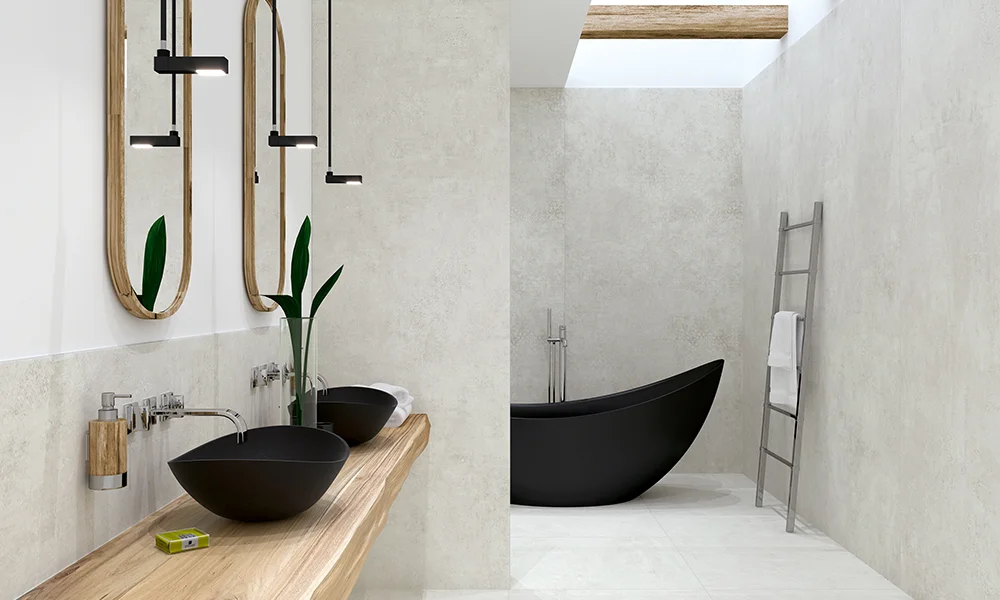
Strategy clarity improves when real spaces guide confident interior planning choices. Visual understanding grows through guided visits to bathroom showrooms cork displays. Practical layouts support decision making with measurable space awareness. Creative confidence rises when settings show true size relationships clearly. Structured demonstrations replace uncertainty with reliable design direction daily.
Design confidence through realistic displays
Full-scale arrangements reveal how elements fit together practically. Visual examples remove guesswork from interior planning processes.
Planning clarity using spatial demonstrations
Demonstration settings present usable ideas for daily living spaces. Physical layouts improve understanding of proportion and balance.
Real-scale visualization supporting design accuracy
Actual size displays help align expectations with physical reality.
• Spatial awareness improves through direct observation of complete room settings.
• Measurement accuracy increases with visible layout demonstrations.
• Furniture selection becomes easier through proportional viewing.
• Lighting decisions improve with realistic reflection assessment.
• Material choice gains confidence through tangible surface evaluation.
Functional arrangement enhancing layout efficiency
Demonstration areas present workable solutions for organized interiors.
• Traffic flow improves through observed movement pathways.
• Storage planning becomes smarter through visual accessibility checks.
• Fixture placement gains precision through sample configurations.
• Space utilization strengthens through demonstrated layout strategies.
• Daily usability increases through practical arrangement guidance.
Material harmony is displayed through complete settings
Complete designs show how finishes interact within one space.
• Texture compatibility improves through combined material observation.
• Color balance strengthens through coordinated surface displays.
• Style consistency appears through unified design themes.
• Visual warmth develops through layered material presentation.
• Design stability grows through proven surface combinations.
Lighting interaction shaping interior perception
Lighting demonstrations reveal how brightness influences design outcomes.
• Shadow control improves through observed illumination placement.
• Mood creation strengthens with balanced lighting examples.
• Reflection quality improves through positioned light sources.
• Energy awareness develops through visible lighting effects.
• Visual comfort rises through guided brightness arrangements.
Custom inspiration through staged environments
Staged displays inspire tailored design ideas for personal interiors.
• Creative vision grows through curated spatial presentations.
• Unique concepts appear through themed demonstration settings.
• Personal taste develops through diverse design exposure.
• Decision confidence strengthens through comparative visual examples.
• Style direction forms through repeated inspirational viewing.
Do full-scale displays improve planning accuracy?
Real environments provide clearer insight into spatial relationships. Planning becomes structured through direct visual reference points. Confidence rises when layouts match actual room proportions.
How do demonstrations simplify design decisions?
Demonstrations reduce confusion by presenting ready solutions.
• Visual clarity replaces abstract planning assumptions.
• Practical examples speed the selection of suitable layouts.
• Real scale guidance prevents costly design errors.
• Immediate feedback supports better design judgment.
• Organized displays encourage focused planning actions.
Why realistic settings matter for modern planning?
Modern interiors require informed choices based on real dimensions. Imagined layouts often fail without physical reference. Demonstrations protect quality and functional harmony.
Direction for successful interior planning
Clear methods guide planning through structured observation.
• Learning increases through exposure to finished room examples.
• Comparison supports the selection of suitable design concepts.
• Evaluation improves through a real-world arrangement study.
• Preparation ensures smoother project execution stages.
• Organization builds confidence in final design outcomes.
Practical clarity questions
· Do demonstrations reduce planning mistakes? Yes, visible layouts guide accurate design decisions.
· Can staged rooms improve confidence? Yes, realistic settings strengthen selection certainty.
· Are displays useful for small spaces? Yes, full scale views reveal proportion challenges.
Planning renewal
Interior projects succeed through informed and visible planning strategies. Design clarity grows when ideas become physically observable. Confidence develops through exposure to real spatial arrangements. Future interiors benefit from structured visual decision processes. Lasting success emerges when bathroom showrooms cork guide planning through demonstration.
