

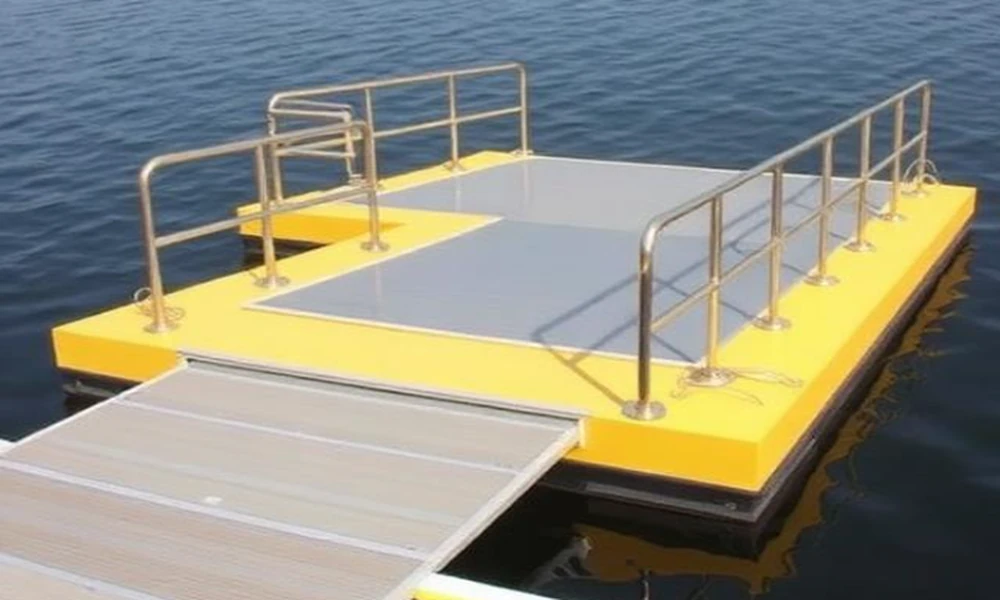
A well-designed floating dock that is well-designed disappears in the background. You walk over, tie it off, or perhaps sit down with coffee, and it’s all good. If the easy feeling gets lost and you notice it, be aware. Small issues can be less expensive if you spot them early. Larger ones could cause a shift towards replacement. Here’s a simple list to help you determine what you should do next.
1.) Wobbly, uneven, or low freeboard
If sections are lower than they did previously or the deck is oriented on one end, the buoyancy may be changing. Crushed foam, floats that are waterlogged, or leaks within sealed modules all cause the deck to sink. Take a look at the freeboard from a few locations. One corner missing by a significant amount usually indicates that you have a single issue with floats that it is possible to replace. A large or even noticeable sagging suggests fatigue throughout the system and could warrant the need for a bigger upgrade.
2.) Broken, soft, or spongy decking or cracked.
Take your time walking around the area. Hard spots on fasteners, large cracks, or boards that stretch more than their neighbors are warning indicators. Rot and UV can cause damage while traveling. It is possible to swap boards; however, if the fasteners fail to hold or joists have been damaged, repairs are an unfinished patchwork that doesn’t last.
3.) Loud, loose, or hinges for binding
Connections are the ones that carry the load. Squeaks, clangs, or obvious play on brackets and hinge pins suggest wear is accelerating. Examine the elongation of holes, bent plates, bent hinges, and a lack of bushings. The tightening of bolts only works once. The presence of oval-shaped holes as well as bent steel indicates that the parts have reached the end of their useful life. Install new hardware to safeguard frames and floats against shock loads.
4.) Corrosion of hardware and frames
Surface rust is common within saltwater. The pitting, smudges, and swollen fasteners aren’t. Examine under cleats and at the gangway connection, and in corners with shadows. Metals that are mixed without isolation speed up corrosion. If you observe extensive pitting of structural members, consider a section reconstruction or replacement timeline.
5.) Anchors that move or chain that “snap”
A dock that is drifting more than usual, is dragging in the opposite direction, or pulls the chain tightly in light chop can indicate anchor issues. Be on the lookout for shortened scopes, broken links, worn chains, or weights that are too small. Verify that the legs do not collide at low tide. If there is no space for a proper catenary, you can add either length or weight. The constant movement even after making adjustments indicates the anchor’s type doesn’t align with the bottom of your anchor and could require a change.
6) Gangway problems when low or high water levels are present
The steep slopes, the scraping of the hinge or gangway landings, which lift off of pads, indicate that the wrong geometry for the current freeboard or the water level swings. This is a straightforward solution, such as changing hinge pins and putting in an additional landing or a bigger one if your dock is too low due to floating floats not working.
7.) Cleats and Fenders pulled out
Boats are able to kiss the same spots over and over again. If rub rails have been damaged, cleats are wiggled, or the backing plates are crushed, you can reinforce the stations. The loose cleats can be more than an inconvenience. They transmit load to framing, and then start cracks you can’t see. When fasteners spin in rotten substrate, stop. Repair the structure before installing hardware.
8) Waves of movement on the deck can feel “twitchy”
A calm dock is one that has dimensions, mass, and adequate damping of its anchor geometry. A twitchy, sloppy motion in moderate chop is a sign of lightweight modules, weak strength, or an anchor that are too small. You can increase the feeling by adding more weight to corners, extending sections, or by tuning the scope. When the frame is flexing, it is possible that repairs will exacerbate the problem without addressing the root cause.
9) Numerous small fixes pile up
If you tighten things every single weekend, the system demands a more substantial decision. Add in the time, equipment, and the possibility of midseason malfunctions. The targeted replacement of the hinge line, finger, or float set may be better than endless patches.
10) Security issues that you can’t avoid
Screws or nails that are exposed and handrails with loose or broken lips between sections and algae build-up on slick surfaces can be immediate dangers. The non-slip surface, the reset of the fastener and regular cleaning aid. If the dock is not able to support safety improvements because the structure is tired and worn out, replacing it will be on the agenda rapidly.
Replacing or repairing: a simple method to make a decision
- Repair when the issue is not atypical: a few faulty floats or worn hinges, a few damaged boards or even tweaks to the anchor scope.
- Replace the sections when wear is repeated in a particular area, such as the finger joint line or an old module series or a frame that has corroded. run.
- Complete replacement occurs when buoyancy is generally diminished, frames are smashed across, the geometry doesn’t work with your water levels or maintenance is permanent.
Simple maintenance that can buy time
- Rinse hardware after salt exposure.
- The bolts must be torqued every season.
- Store extra hinge pins and cleats and fenders available.
- Cut lines to prevent the chafe and humming.
- Photograph anchors and connections at low water two times every year to observe changes.
Bottom line: Your floating dock will inform you what it requires if you slow down and pay attention. Take a measurement of the freeboard, observe the movement, check the connections and tell the truth about how often you’re working on the same problems. Fast repairs help keep them on your water. Regularly scheduled replacements ensure you are there with no surprises.
This post was written by a professional at Supreme Marine Floating Docks. Supreme Marine Floating Docks is dedicated to providing top-quality floating dock for sale Miami and marine accessories that combine durability, innovation, and superior performance. While we are a new brand, our team brings over 50 years of combined industry experience, making us a trusted name in the marine world. We are passionate about designing and delivering products that meet the highest standards, ensuring reliability and longevity in all marine environments. Whether for residential, commercial, or recreational use, our docks are crafted with precision and care, setting a new benchmark in the industry. At Supreme Marine, we don’t just build docks-we create lasting solutions.
