

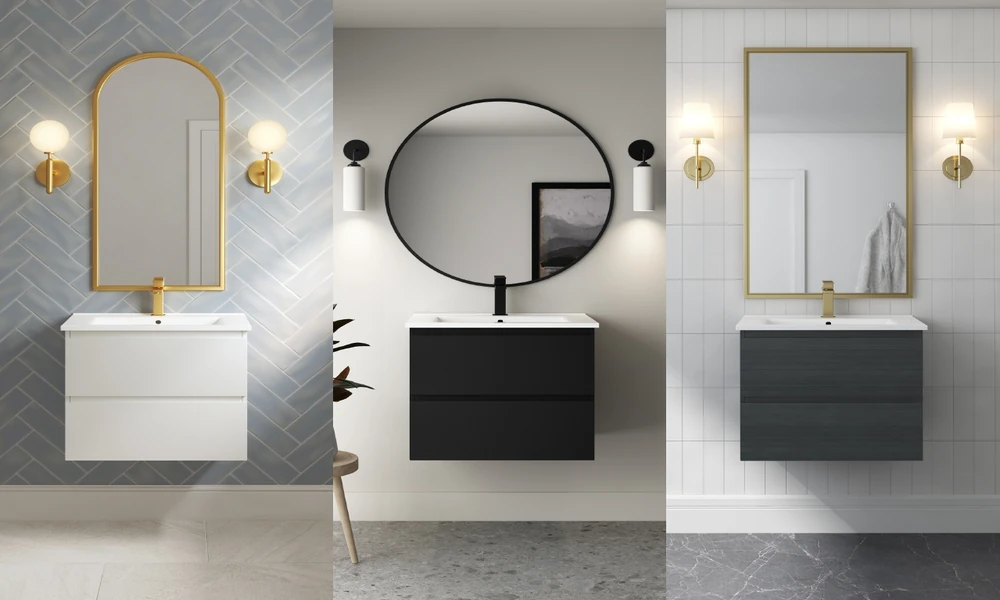
Wall-hung vanities are quietly taking over the spotlight in modern bathroom remodels, challenging long-held beliefs about what makes a functional and beautiful space. This trend isn’t just a fleeting Instagram moment, it’s a reaction to real-world needs for smart storage, visual openness, and design flexibility. Yet, a handful of persistent myths continue to cloud homeowners’ decisions. It’s time to separate fact from fiction and see why wall-hung vanities have earned their place in contemporary bathroom design.
Myth 1: Wall-Hung Vanities Lack Storage Space
The idea that wall-hung vanities come up short on storage is outdated. True, early “floating” models prioritized minimalism and left little room for stashing essentials. But today’s options are engineered for practicality as well as style.
Modern units maximize every inch: deep drawers, slim compartments, and customizable organizers keep clutter at bay. Many wall-mounted designs rival their freestanding counterparts, as seen in showrooms across Montreal where both styles are presented side-by-side. The key difference? Wall-hung vanities free up the floor, making even compact bathrooms feel larger and less crowded.
| Feature | Wall-Hung Vanities | Freestanding Vanities |
|———————-|———————-|———————-|
| Drawer Depth | Deep (customizable) | Deep (standard) |
| Floor Access | Clear (easy clean) | Blocked/fixed base |
| Max Storage* | Comparable | Comparable |
*Dependent on model and dimensions.
Myth 2: Installation of Wall-Hung Vanities Is Complicated and Costly
Skepticism about mounting heavy cabinets on drywall is understandable. Wall-hung vanities do require solid anchoring, usually into studs or reinforced supports. However, this step is straightforward for professionals and experienced DIYers alike.
For most homes, only basic carpentry skills are needed to ensure stability. The installation is often completed in the same timeframe as freestanding vanities, with the added benefit of not having to work around floor obstacles or baseboards. Plus, wall-mounted units make future flooring renovations simpler. Over time, the flexibility and ease of cleaning beneath the unit can actually save money and hassle.
Myth 3: Wall-Hung Vanities Are Not Durable or Stable
Concerns about durability often stem from memories of cheap, poorly installed early models. Today’s wall-hung vanities are built with robust frames, soft-close hardware, and reliable mounting systems. Premium materials like engineered quartz, polymarble, and solid wood ensure resistance to moisture and daily wear.
Brands have invested in engineering advances that keep units secure even in busy family bathrooms. Customer reviews frequently mention long-lasting performance, especially from reputable Montreal retailers who showcase real-life installs throughout their showrooms.
Myth 4: Wall-Hung Vanities Are Only Suited for Small Bathrooms
While wall-hung vanities do wonders in urban condos and powder rooms, they’re increasingly found in spacious primary bathrooms. Designers use them to create a sense of openness, highlight striking tilework, or simply streamline the vibe of the room.
Large wall-mounted models, often featuring double sinks and generous countertops, bring both function and visual balance to bigger spaces. With a range of widths (from a compact 18 inches up to a generous 84 inches), these vanities easily adapt to any footprint.
Myth 5: Wall-Hung Vanities Limit Style and Customization Options
Forget the notion that wall-hung means generic. Today’s manufacturers offer a spectrum of styles: matte black minimalism, textured oak, walnut with sculpted lines, and high-gloss modernism. Countertop options abound, from engineered quartz to solid surface and ceramic.
Modular systems allow for tailored storage layouts, hardware, and finishes, making it easy to coordinate with any bathroom décor. This agility has propelled the wall-hung vanity into the forefront of contemporary design, easily holding its own among more traditional freestanding pieces.
For anyone comparing bathroom vanities, the variety of wall-hung options is surprisingly vast and flexible.
Myth 6: Maintenance and Cleaning Are More Difficult with Wall-Hung Vanities
Cleaning beneath a floating vanity is dramatically easier than maneuvering around the feet of a bulky cabinet. The open space below gives full mop or vacuum access, reducing dust and mildew accumulation in hard-to-reach corners.
Advanced finishes further ease upkeep. Many wall-hung vanities feature stain-resistant surfaces, soft-close drawers that withstand repeated use, and seamless countertops that prevent grime buildup at the edges. Quick daily wipes keep the units looking fresh for years.
The Real Reasons Behind the Shift to Wall-Hung Vanities
Why the surge in popularity? The answer ties directly to the way we live now. Urban homes demand smart space solutions, and open, airy bathrooms rank high on wish lists. Minimalism isn’t just a style, it’s a response to the need for calm and order amid daily chaos.
Sustainability and efficiency matter too. Wall-hung vanities use less material, can be swapped out with minimal renovation, and make plumbing and flooring repairs far simpler. As homeowners seek both beauty and practicality, the floating vanity emerges as a symbol of thoughtful, future-focused design.
In the end, wall-hung bathroom vanities are more than a trend. They’re a smart adaptation to modern lifestyles, offering elegance, flexibility, and utility in equal measure. The myths have faded; what remains is a new standard for contemporary bathrooms.
