

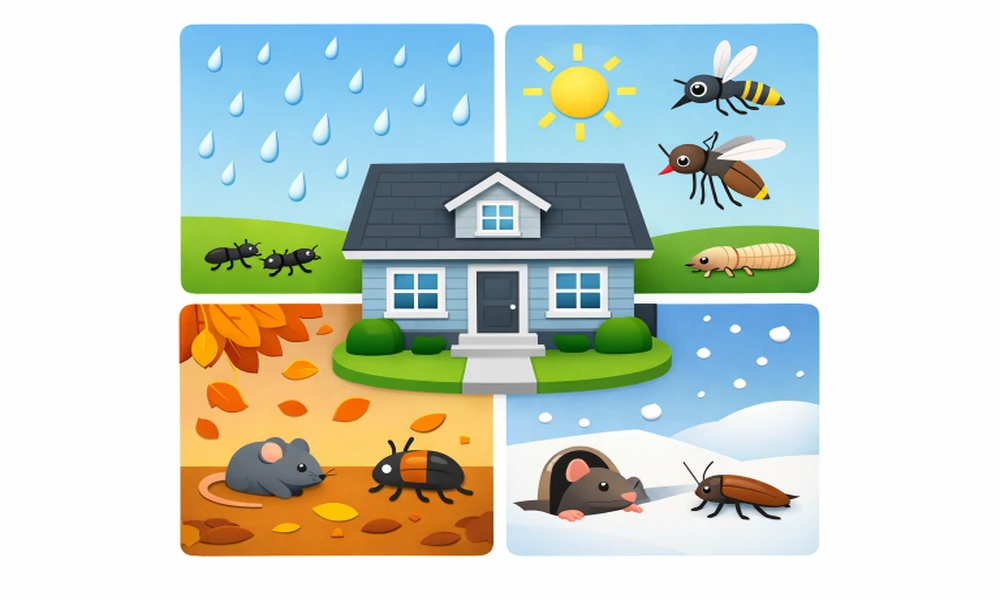
Key Takeaways
- Spring: Rising temperatures and increased moisture awaken pests like ants, termites, and mosquitoes.
- Summer: Warm, humid conditions lead to peak activity for mosquitoes, wasps, and cockroaches.
- Fall: Cooling temperatures drive rodents and insects indoors seeking warmth.
- Winter: While outdoor activity decreases, indoor infestations of rodents and certain insects persist.
Indianapolis homeowners are no strangers to the city’s rapidly shifting seasonal weather. From humid springs to brisk winters, local weather patterns play a pivotal role in how and when pests invade homes. Understanding these seasonal influences helps families protect their living spaces. To dive deeper into tailored solutions for your specific neighborhood, learn more about local pest control options designed specifically for Indianapolis environments.
Pest problems aren’t just an annual nuisance; they evolve with every change in temperature, rainfall, and humidity. Being aware of which pests become active at different times of year allows homeowners to take preventive steps and address issues before they escalate. For example, the heavy rain that often saturates Central Indiana in early spring can trigger termite swarms and an increase in mosquito populations, while cold snaps in autumn and winter send rodents searching for indoor shelter.
This cycle means that the right pest management strategies must be both proactive and ongoing. Indianapolis’s unique weather conditions make it crucial to avoid a “set it and forget it” approach to pest control.
Weather also shapes the ecology of local neighborhoods and parks, providing habitat for many familiar pests. Understanding how these environments interact with homes and businesses is vital for preventing year-round infestations. This piece will detail what to expect each season and practical solutions to protect your space.
Spring: Awakening of Pests in Indianapolis
As the frost melts away and crocuses bloom, Indianapolis faces a surge of pest activity. Increased moisture from spring rains, combined with gradually warming temperatures, provides the perfect breeding ground for ants and termites. Homeowners might notice ants forming trails inside kitchens or around windowsills, a clear sign that colonies are seeking new food sources after winter dormancy. Termites also begin their swarming phase at this time, putting local wooden structures at risk.
Standing water, whether from clogged gutters, puddles in backyards, or poorly draining landscaping, allows mosquitoes to lay eggs. Just a few days of pooling water in places like Eagle Creek Park can result in a significant increase in mosquito populations, posing both comfort and health risks, as some mosquitoes carry diseases like West Nile virus.
Summer: Peak Pest Activity in Central Indiana Neighborhoods
Indianapolis summer brings heat, humidity, and the height of pest invasions. Mosquitoes, once a mild nuisance in spring, become relentless. Areas near White River and city greenways often report the highest concentrations. Delaying yard work, neglecting pet bowls outdoors, or leaving trash containers uncovered multiplies breeding opportunities for both mosquitoes and cockroaches. Wasps and hornets also reach peak colony sizes in the late summer, posing risks to homeowners who encounter active nests on porches, decks, or garages.
Cockroaches, resilient even in well-maintained homes, use the summer warmth to expand their range from kitchens to bathrooms and laundry areas. Their rapid breeding cycles during warm and damp months make summer pest control and routine cleaning important. The summer heat amplifies odors, which further attracts many household pests, so regular trash disposal and avoiding food crumbs indoors are crucial steps.
Fall: Pests Seek Shelter Indoors in Indianapolis Homes
As temperatures in Indianapolis begin to dip in September and October, pests look for warmth and safety, often migrating indoors. Rodents such as mice and rats are driven not just by cold but also by the search for food, a process made easier by exterior gaps around pipes, vents, or improperly sealed garage doors. Once inside, rodents will nest in attics, basements, and wall voids.
Common autumn invaders also include stink bugs, boxelder bugs, and Asian lady beetles. They congregate on the sunnier sides of homes, attracted by residual heat and finding easy entry through cracks in siding or window frames. The result is sudden, large populations indoors just as residents begin to spend more time inside. Proactively sealing exterior cracks and inspecting screens and door sweeps before cooler weather arrives minimizes these migration events. The Environmental Protection Agency provides seasonal prevention tips for homeowners (see more here).
Winter: Indoor Pests Remain Active Despite Outdoor Chill
Indianapolis winters may quiet the buzz and crawl of outdoor pests, but indoor infestations can persist. Rodents established during the fall remain active, often gnawing on wires or stored food, and may multiply undetected in wall voids, crawl spaces, or pantries. German cockroaches, adapted to the warmth and humidity of heated homes, continue their activity year-round, while silverfish and firebrats thrive in damp areas such as basements or bathrooms.
Holiday activities, like bringing firewood inside or storing food for gatherings, can create new opportunities for pests to flourish. Staying vigilant with storage practices, regular inspections, and moisture control is key to avoiding winter infestations.
Proactive Pest Management Strategies for Indianapolis Residents
Effective pest prevention in and around Indianapolis requires adapting your approach to each season. In spring, sealing entry points and reducing standing water targets ants and termites before they spread. During summer, controlling humidity indoors and keeping outdoor areas free from debris limits cockroach and wasp populations. Thoroughly inspecting your home’s exterior every fall and making timely repairs is the best way to block autumn invaders. In winter, focusing on cleanliness and monitoring for rodent droppings or cockroach sightings keeps your home comfortable and safe all year.
- Spring: Inspect for moisture issues, address leaks, and ensure yard drainage works properly.
- Summer: Eliminate standing water and keep kitchens and bathrooms clean to deter pests.
- Fall: Seal all potential entry points and store food in airtight containers.
- Winter: Conduct indoor checks for droppings, nests, or other signs of activity.
Conclusion
Indianapolis’s seasonal weather patterns greatly influence pest activity, requiring residents to stay attentive and proactive throughout the year. By understanding which pests peak during each season and addressing vulnerabilities specific to local conditions, homeowners can effectively reduce infestations and enjoy peace of mind. Taking a strategic, year-round approach to pest management is the surest way to keep Indianapolis homes pest-free and comfortable for all seasons.
